
Pajaritos are magic truffles: the sclerotia of a psilocybin mushroom, sold fresh in 15 gram packs in Dutch smartshops. The name is Spanish for little birds. In Mexico, pajarito is the folk name of Psilocybe mexicana, and Dutch truffle sellers sell Pajaritos as a cultivated strain of that species. Avalon Magic Plants, the shop that publishes this site, does not name a species on its Pajaritos page.
Little birds from the Sierra Mazateca
Psilocybe mexicana is a small mushroom. A chemistry thesis on psilocin and psilocybin from the National Autonomous University of Mexico (UNAM) lists the three best-known psilocybin mushrooms of Mexico by their local names: San Isidro (P. cubensis), derrumbe or landslide (P. caerulescens) and pajarito (P. mexicana). It describes the pajarito as one of the smallest, with a cap of about 1.5 cm (Pérez y Pérez, UNAM). The Spanish-language Wikipedia article on the species gives the same name: "llamada en México pajarito" (Wikipedia ES).
The name belongs to the Sierra Mazateca in Oaxaca, the mountains around Huautla de Jiménez where the Mazatec people hold mushroom ceremonies at night (Guzmán, 2008). A 2022 history of the mushroom trade in that region lists the "Small Birds" (Psilocybe mexicana) among the four Mazatec mushrooms that matched the old descriptions of teonanácatl (García de Teresa, 2022). Small Birds is the English rendering of the Spanish pajaritos. The Mazatec language has its own words for the mushrooms; we found no reliable source for the exact Mazatec term behind "little birds", so we do not give one here.
Avalon's own page explains the name differently: according to the shop, Pajaritos means "little bird" because of the light, cheerful feeling in which thoughts "flutter" through your head (Avalon, Pajaritos). That is the shop's description of the experience. The word itself is older than the truffle.
Why the species matters
Psilocybe mexicana has a place in the history of psilocybin. In 1958 the Swiss chemist Albert Hofmann, working with Roger Heim, isolated and named psilocybin from P. mexicana that had been grown in the laboratory (Hofmann et al., 1958). Heim had described the species a year earlier. It is one of the species that can form sclerotia, hard lumps of mycelium that form a dormant stage of the fungus and help it survive fire and other setbacks (Wikipedia EN).
Those lumps are what a truffle pack contains. The Dutch addiction care organisation Jellinek describes truffles as part of the fungus that is not a mushroom: a kind of small stone in which the fungus stores nutrients (Jellinek). Some of them contain psilocybin and psilocin.
Pajaritos and Mexicana A
Avalon also sells Mexicana A truffles, which the shop describes as sclerotia that grow beneath the Psilocybe mexicana mushroom. Pajaritos are sold as a separate strain, and the shop ranks them a step stronger than Mexicana A. Dutch sellers describe Pajaritos as a variety of the same species that grows larger, denser truffles. We found no published lab comparison of the two, so read the difference as the shop's grading. The strength page shows where Pajaritos sit in Avalon's range.
 Fresh truffles
Pajaritos - Magic Truffles
€14.95
Avalon Magic Plants
Fresh truffles
Pajaritos - Magic Truffles
€14.95
Avalon Magic Plants
 Fresh truffles
(1+1) Mexicana A - Magic Truffles
€14.95
Avalon Magic Plants
Fresh truffles
(1+1) Mexicana A - Magic Truffles
€14.95
Avalon Magic Plants
What is in the pack
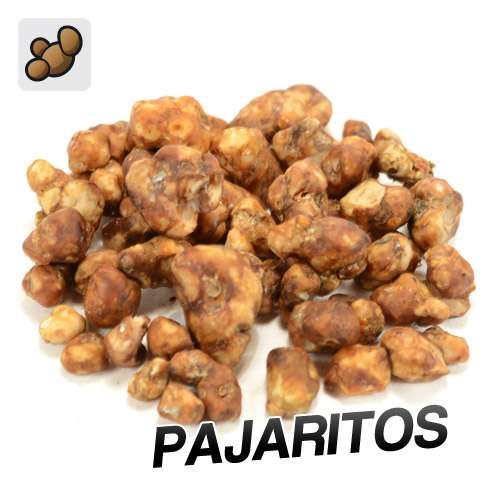
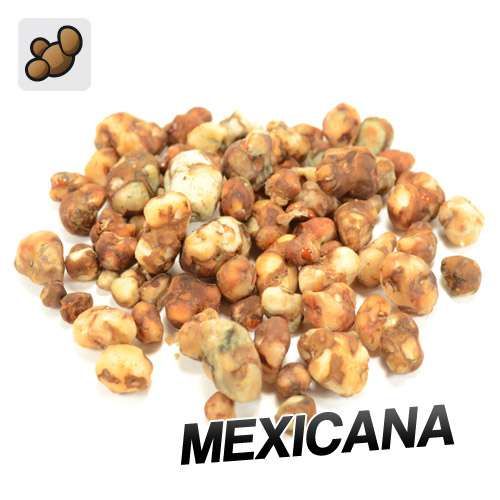
- 15 grams of fresh truffles. Irregular golden-brown lumps of different sizes. The weight is the only fixed number; the number of lumps varies per pack.
- Fresh, not dried. The shop ships them fresh and advises keeping them in the fridge. See storage for how long they keep.
- No dose markings. You portion the truffles yourself, so a small kitchen scale is the most useful accessory. The first session page gives amounts in grams.
The truffles taste bitter and slightly nutty. The shop suggests chewing them or making tea by chopping them finely and steeping them in hot water.
The name on the label
You will see the strain written as Pajaritos, Pajarito and occasionally as "Psilocybe Pajaritos". The last form looks like a scientific name but is a trade name: the Global Biodiversity Information Facility (GBIF) lists Psilocybe mexicana R. Heim as an accepted species and has no species called pajaritos (checked 16 October 2026). When you read that Pajaritos are "Psilocybe mexicana truffles", that is how the trade classifies the strain.
Where to go from here
- How strong Pajaritos are next to the other Avalon truffles
- A first session: grams, timing and company
- The law: legal in the Netherlands, not across the border